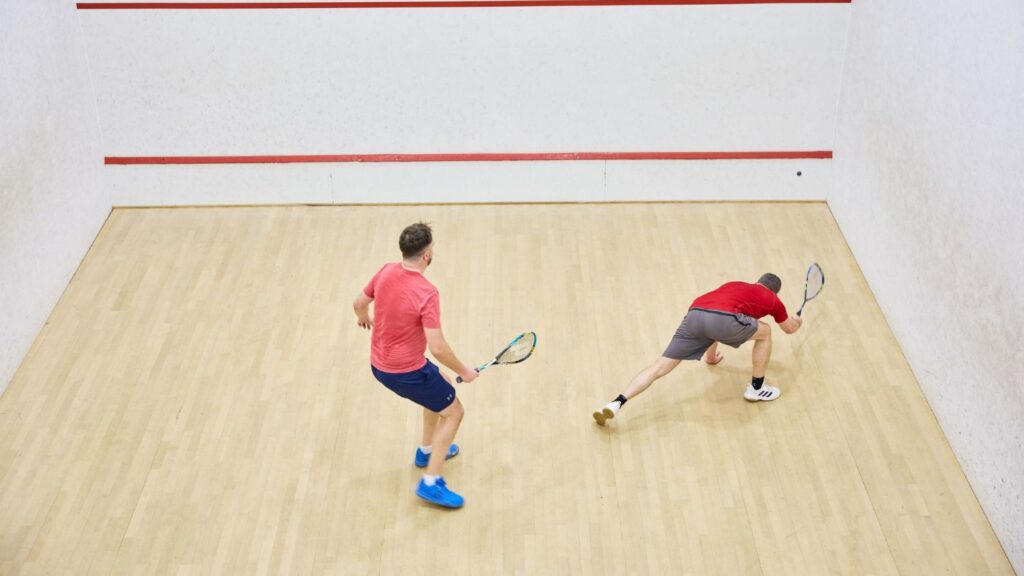
If you’re new to squash, improving your game doesn’t mean you need to focus on playing difficult shots right away. The biggest improvements often come from getting the basics right: learning how to move around the court, control the squash ball and get into a better position for the next shot.
Whether you’ve just picked up a racket and are learning the sport for the first time or already have some court experience, regular practice can build your technique and confidence.
In this guide, we’ll look at seven simple tips for how to get better at squash, along with the basics of serving and ways to feel more comfortable on the court.
At Bluecoat Sports, you can book squash courts on a pay-as-you-go basis, join a range of coached and social squash sessions, and explore other racket sports.
We’re proud to offer a welcoming environment where you can use our facilities and keep developing your game. Contact us for more information.
What is squash?
Squash is an indoor racket sport usually played by two people on an enclosed court, although doubles is also played with four.
Players use rackets to hit a small rubber ball so that it reaches the front wall, either directly or after touching another wall. The ball can be volleyed or allowed to bounce once before it is returned.
It’s a fast-moving game that combines racket skills, movement and tactics.
7 squash tips for beginners
Improving at squash takes time, but focusing on a few key areas can make the game feel much easier. These seven tips cover the fundamentals beginners can work on to improve technique, movement, control and confidence on the court.
1. Focus on control before power
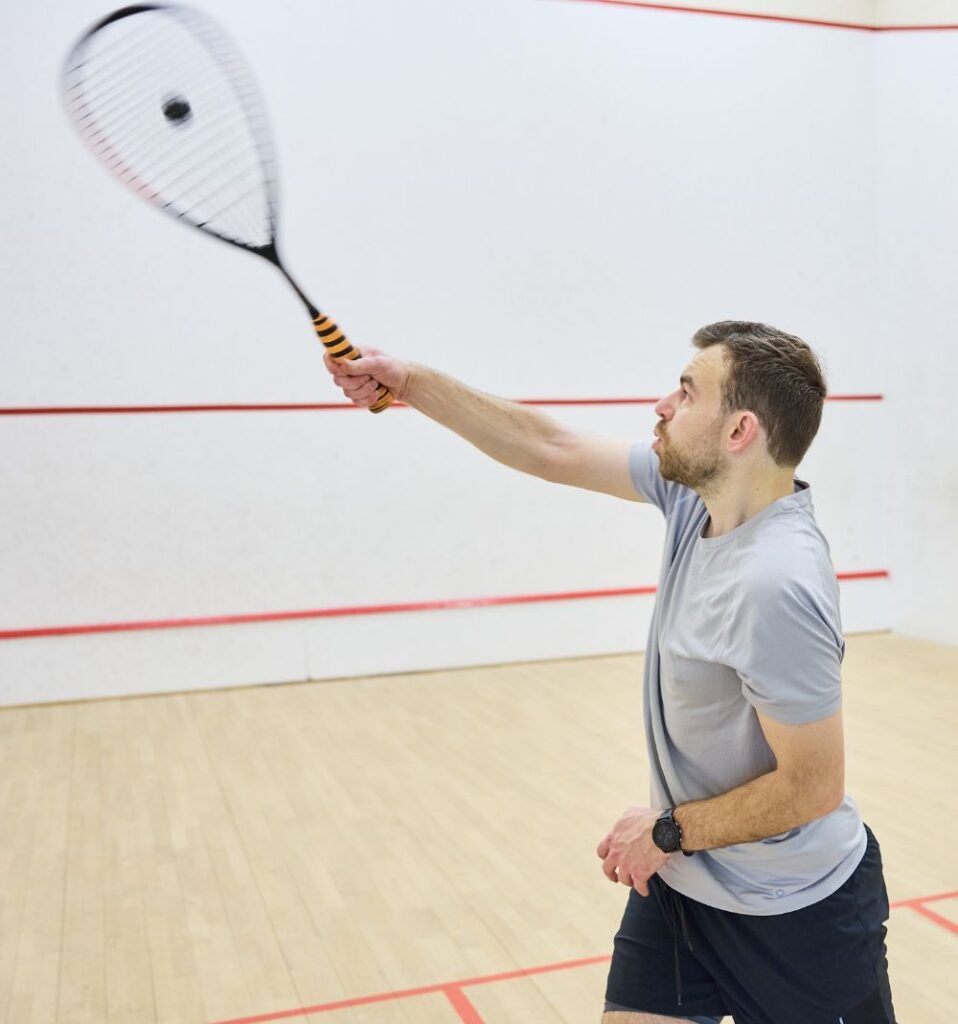
When you start playing squash, it can be tempting to focus on power. At this stage, the main thing is learning to hit the ball with control.
Start with a comfortable grip and a smooth, controlled swing. Give yourself enough space to prepare the racket properly, and watch the ball as it meets the racket. A controlled forehand or backhand will generally be more useful than hitting as hard as possible.
It also helps to keep your racket ready between shots rather than letting it drop by your side. This can make it easier to prepare when the ball comes back quickly.
The more consistent your technique becomes, the easier it is to add pace, power and more advanced shots later.
2. Improve your position on the T
Good court position can make a big difference to how much ground you need to cover.
The T is the central area of the squash court where the short line meets the half-court line. After you play your shot, try to recover towards this position rather than staying stuck in a corner.
From the middle, you’re better placed to cover shots played into the front of the court, along the side walls or towards the back corners when your opponent plays the next shot. You don’t need to stand directly on the T throughout every rally, but it’s a useful position to recover towards when you have time.
Try to move back into position without taking your eyes off the ball. Smooth movement and good balance can often help more than simply trying to run faster.
3. Work on your movement around the court
Squash involves quick changes of direction, short bursts of movement and frequent lunging, so good footwork can make it easier to reach the ball in a balanced position.
Use small adjustment steps as you approach the ball so you can find a comfortable position before you swing. Controlled lunges can help you reach shots in different areas of the court while staying balanced and avoiding getting caught on the wrong foot.
As you move, try to stay light on your feet rather than taking unnecessarily large or heavy steps. This can make it easier to change direction and react when the ball comes back quickly.
Court awareness matters too: if your opponent is too close and there is a risk of hitting them with the ball or racket, stop rather than play the shot.
4. Focus on hitting straight shots

One of the best shots for beginners to practise is the straight drive.
A straight drive is hit towards the front wall so the ball comes back down the same side of the court, ideally close to the side wall. When played accurately, it can send the ball deep into the court and make it more difficult for your opponent.
Practise straight drives as both forehand and backhand shots, and rather than aiming for maximum pace, choose a target on the front wall and concentrate on hitting a consistent line.
As your control improves, try to get the ball closer to the side wall and towards the back corners.
5. Practise keeping rallies going
When you’re learning, winning every point doesn’t need to be the focus of every session. Instead, try to keep the rally going, as longer rallies give you more opportunities to practise your swing, movement, court position and control.
With a partner, you could set a target for the number of consecutive shots you can play before the rally ends. Start at a comfortable pace and focus on making each shot playable.
Using the right squash ball can also make a difference. Higher-bounce balls give beginners more time to react and can make it easier to keep a rally going. Blue balls offer the highest bounce for beginners, while red-dot balls suit improving or recreational players.
6. Practise on your own as well as with an opponent
You don’t always need another player to work on your squash. Solo practice gives you time to repeat the same movement, focus on accuracy and work on specific areas of your game without the pressure of a rally.
Try hitting straight drives repeatedly on your forehand side before switching to your backhand. You can also choose a target on the front wall and see how consistently you can hit towards it, paying attention to where the ball bounces and how changing the height of your shot affects where it reaches the back wall.
Another useful exercise is ghosting, where you practise moving to different areas of the court without hitting a ball, then recover towards the T as you would during a rally.
Solo practice can help you build consistency, but playing with other people gives you the chance to put those skills into practice in a more realistic game situation.
7. Play regularly and learn from other players
Once you have spent time working on individual skills, regular games can help you become more comfortable applying them.
Playing different opponents exposes you to a wider range of shots, styles and tactics, while helping you get used to the pace of the game and make decisions more naturally during a rally.
Coaching can also be useful if you want support with a specific part of your game, such as your grip, serve, swing or movement, as a coach can help identify small adjustments that may be difficult to notice on your own.
Bluecoat Sports offers coached and social squash sessions alongside court hire, giving you different ways to practise, play and meet other players.
How serving works in squash
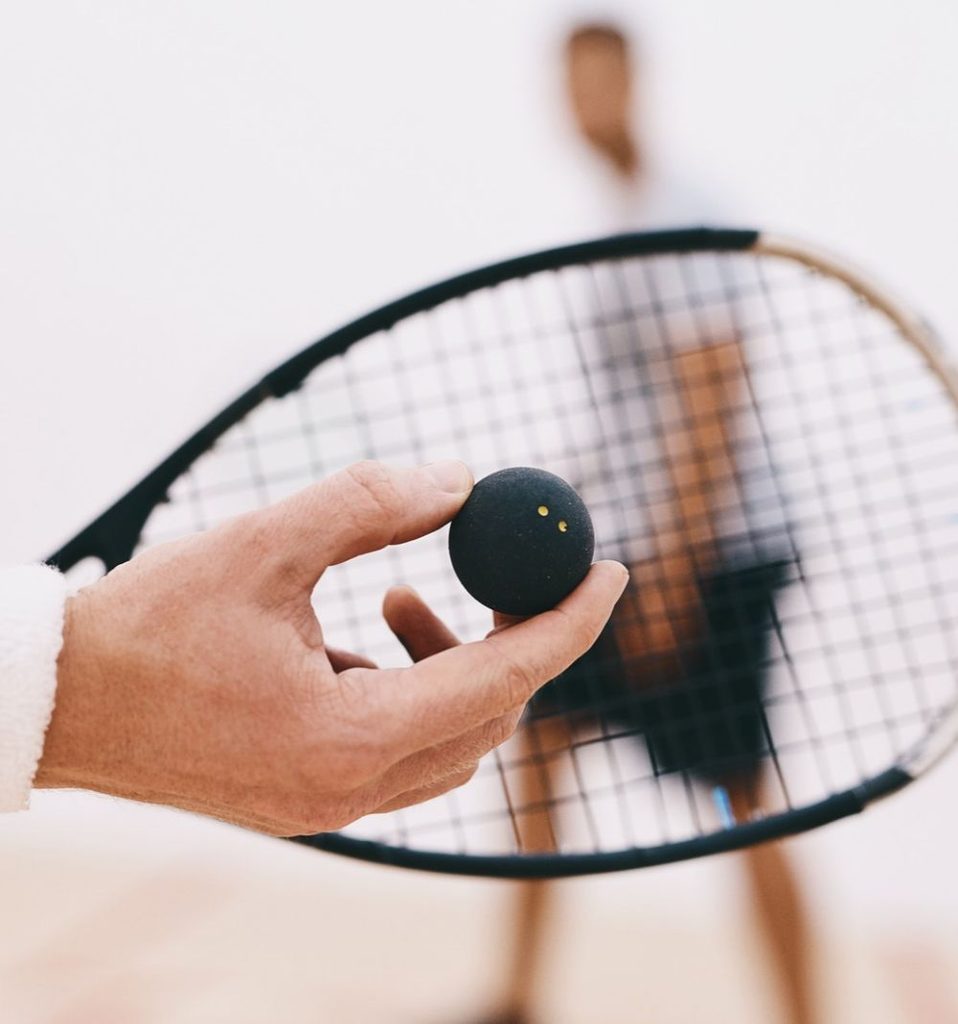
Serving is another part of the game beginners will need to learn. Each rally starts with a serve, so understanding the basic rules can help you feel ready when playing matches.
For a legal serve, you serve from one of the service boxes and hit the ball directly onto the front wall above the service line and below the out line. Unless your opponent volleys it, the ball must then land in the opposite back quarter of the court.
As you practise, focus on serving consistently from both sides.
How to build confidence on the squash court
Confidence usually develops as the basics become more familiar. Rather than trying to improve everything at once, focus on one or two areas each training session, and give yourself time to get comfortable with the court, racket, and how the squash ball moves and bounces.
Playing with someone of a similar ability can also help, as it often makes it easier to sustain rallies, try different shots and practise without feeling pressured to win every point.
As your confidence grows, you can add more variety to your game with volleys, shorter shots, and different ways to apply pressure. The key is to keep progressing at a pace that feels manageable and enjoyable.
Summary
If you want to get better at squash, start with the fundamentals. Develop a controlled swing, recover towards the T, practise straight drives, work on your movement and become more comfortable with serving.
Regular practice, longer rallies and time spent playing different opponents can then help improve your consistency and confidence on the court. Focus on the basics first, and you can gradually add more pace, power and variety as your technique develops.
Play squash at Bluecoat Sports
Ready to put these tips into practice? At Bluecoat Sports in Christ’s Hospital, Horsham, we have six squash courts, pay-as-you-go booking, and a range of squash sessions for beginners through to experienced players.
Explore our other racket sport facilities, including outdoor padel courts, and find out more about our membership options.
Frequently asked questions
How can a beginner get better at squash?
Focus on the basics: a comfortable grip, controlled swing, good court position and consistent straight shots. Regular practice will help these movements feel more natural and make it easier to add more advanced shots later.
How often should you practise squash?
There’s no single schedule that suits everyone. Regular, manageable sessions are usually more useful than playing occasionally and trying to improve everything at once.
Is squash difficult to learn?
The basic rules and movements are relatively straightforward to pick up, but improving your positioning, shot control, and movement takes practice. Focusing on the fundamentals first can make the game feel much more manageable.


