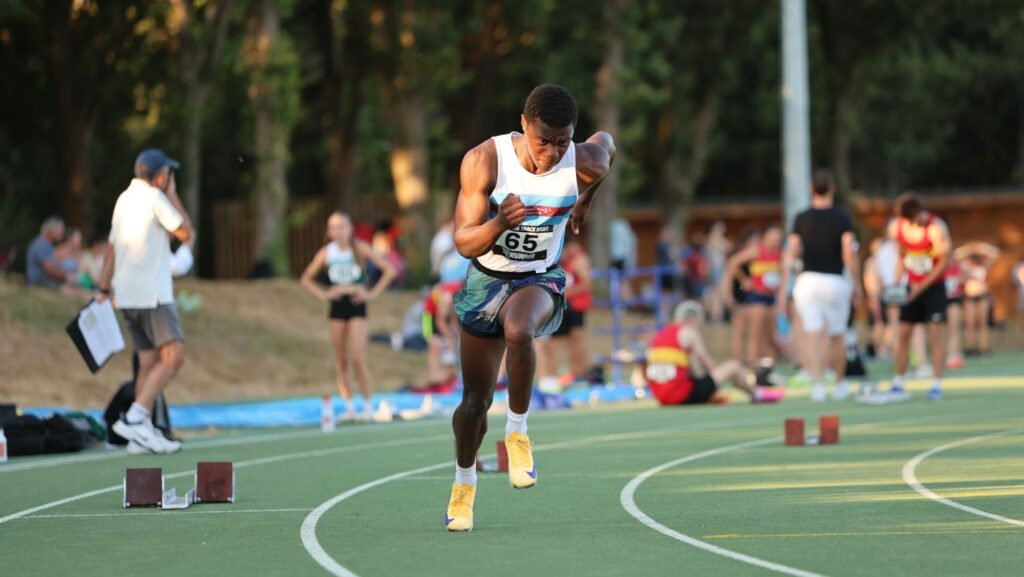
Running faster isn’t just about pushing harder. Good running form, coordination, strength, and control affect how efficiently you move, and targeted running drills can help you improve each area.
Running drills are short, controlled exercises that focus on specific parts of your running technique, such as knee drive, arm swing, foot placement and acceleration. Regularly incorporating drills into your warm-up or training routine can help you become more aware of your form and prepare your body to run faster.
Some of the best running drills include high knees, A-skips, heel flicks, strides and short acceleration runs. In this guide, we’ll look at how these drills work, with tips for beginners and more experienced runners.
At Bluecoat Sports, our running classes include Beginners Run, Track Intervals and Speed Intervals, providing structured options for new runners and those looking to improve their running performance.
Book a class today, or call reception on 01403 247572 for more information and to become a member.
What are running drills?
Running drills break the running gait into simpler movements so you can focus on technique without running at maximum speed.
For example, an A-skip drill emphasises knee drive – the forward and upward movement of the thigh during each stride – alongside coordination and foot placement. High knees also encourage quick leg movement and an upright posture, while other drills focus on acceleration, cadence or upper-body movement.
They are often used after an easy jog and dynamic stretches as part of a warm-up before faster running. Strength training, recovery and gradually increasing your running volume also play important roles in becoming a stronger runner.
Why include running drills in your training?
Running drills can help you:
- Improve running form by focusing on posture, knee drive, arm motion and foot placement
- Build coordination by practising how your upper and lower body work together
- Prepare for faster running by gradually introducing movements used at higher speeds
- Improve movement awareness so you can recognise when your form starts to break down
- Warm up effectively before interval, speed or harder running sessions
Regularly incorporating a few running drills into your routine can help reinforce good technique and prepare you for more demanding sessions.
The best running drills to improve speed and technique
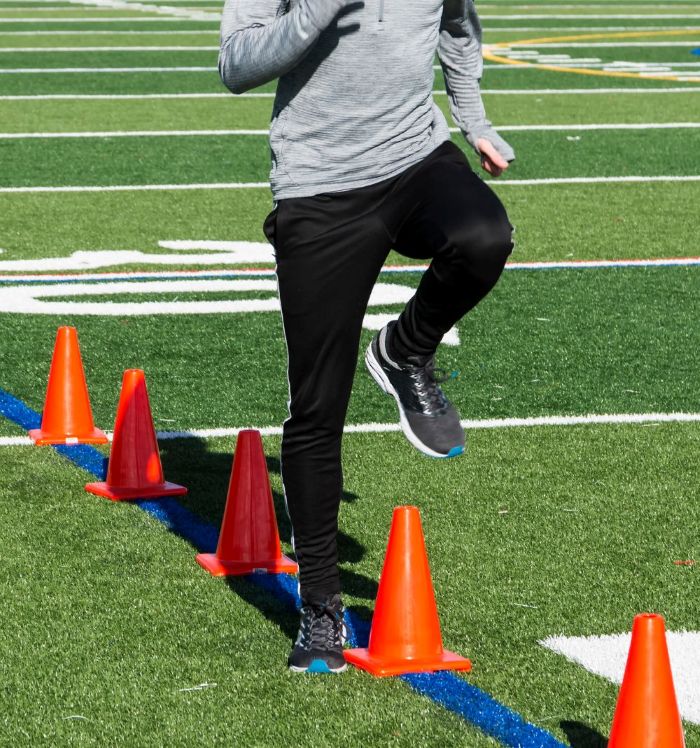
Different drills focus on different parts of running form, so it can be useful to mix a few into warm-ups rather than relying on the same movement every time.
High knees
High knees are a simple running form drill that can help with rhythm, coordination and knee drive. The movement involves short, quick steps with an active knee lift, while the upper body stays tall and relaxed.
The focus is on controlled, rhythmic movement and good running form rather than exaggerating how high the knees lift.
A-skips
The A-skip combines a skipping action with a deliberate knee lift and coordinated arm movement. As one knee rises, the opposite arm moves forward in a similar pattern to normal running, while the foot returns underneath the body before the movement switches to the other leg.
A-skips are commonly used to work on knee drive, coordination, and foot placement, with an emphasis on a smooth, controlled rhythm.
Heel flicks (butt kicks)
Heel flicks, also known as butt kicks, can help with coordination and leg turnover. The drill involves quick forward movement while each heel lifts towards the glutes, with the upper body staying tall and the arms moving naturally.
It should feel like an exaggerated running motion rather than a stationary kicking exercise.
B-skips
B-skips build on the A-skip by adding a controlled leg extension. The movement starts with a knee lift, then the lower leg extends forward, and the foot then moves down and back towards the ground underneath the body.
As B-skips require more coordination than simpler form drills, they are often better suited to experienced runners or anyone already familiar with A-skips.
Strides
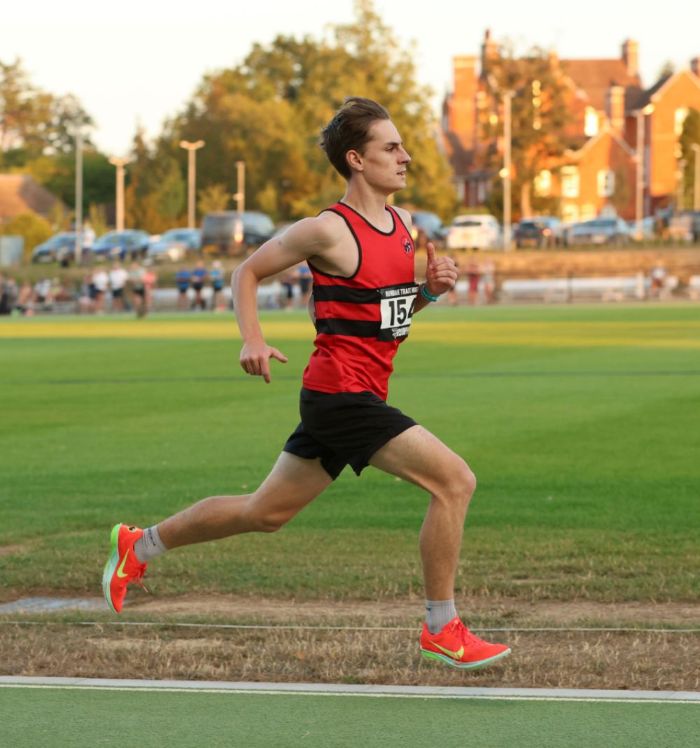
Strides are short, controlled periods of faster running that can help runners practise good form at a quicker pace. They typically begin at a comfortable speed, gradually build to a fast but relaxed pace, then ease back down in a controlled way.
The focus is on maintaining a smooth arm swing, a relaxed upper body and an efficient stride as the pace increases.
Short acceleration runs
Short acceleration runs focus on building speed gradually and smoothly over a short distance. They usually begin at an easy pace before progressing into a faster effort, allowing runners to work on acceleration while maintaining good posture and controlled steps.
They can be particularly useful before speed-focused training because they help bridge the gap between an easy warm-up and higher-intensity running.
Fast feet
Fast-feet drills use short, quick steps while keeping the body relaxed and upright. The focus is on light, controlled foot contact and keeping the upper body steady as the feet move quickly underneath.
They are usually performed over short distances, with more emphasis on coordination and movement quality than duration.
How running drills fit into a workout
Running drills are typically used between the general warm-up and the main running session. This gives runners a chance to focus on technique before moving into faster or more demanding work.
They are usually kept short and controlled, aiming to reinforce good running form rather than create fatigue before the main workout.
Running drills for beginners
For new runners, simpler drills such as high knees, A-skips and relaxed strides are a good place to start. These movements can build confidence in running form, coordination, and control before progressing to faster or more technical drills.
The emphasis should be on movement quality rather than speed, with a relaxed upper body and controlled arm and leg movements.
Our Beginners Run class at Bluecoat Sports is designed to help people get started, with a warm-up, running activity and cool-down aimed at progressing from walking towards jogging.
If you’re new to track running, read our track running for beginners guide.
Using running drills in speed training
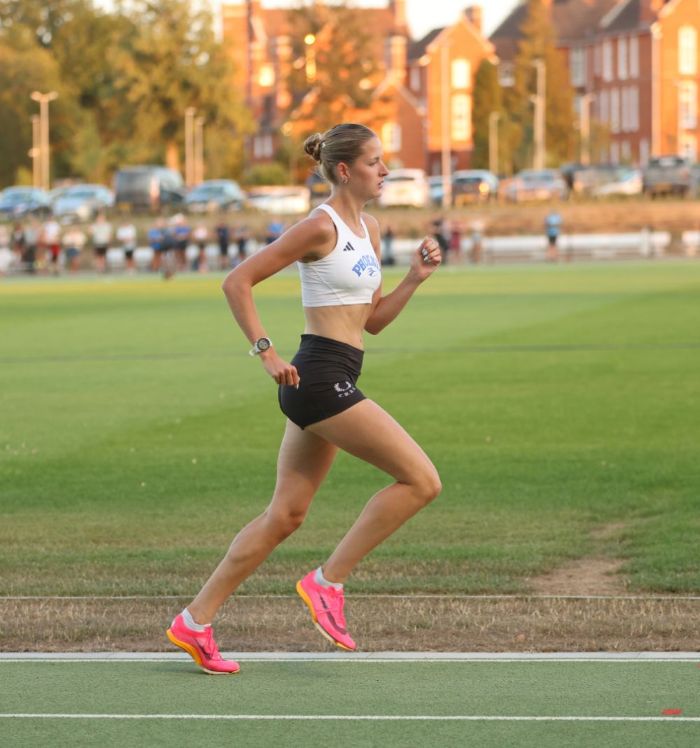
Running drills can be used alongside faster running to help reinforce good technique when the pace increases. They are often included within warm-ups or speed-focused sessions to prepare the body for quicker movement and to practise areas such as coordination, acceleration and running form.
The drills themselves are only one part of speed training. Short sprints, interval work and explosive movements can also help develop pace, power and overall running performance.
At Bluecoat Sports, our Speed Intervals and Track Intervals sessions offer structured ways to help improve speed, pacing, and overall running performance.
Common running drill mistakes to avoid
Some common mistakes can reduce the value of running drills:
- Moving too quickly – rushing can make it harder to maintain coordination and good running form
- Overdoing the movement – drills such as high knees, A-skips and B-skips should stay controlled rather than becoming exaggerated
- Focusing on speed over technique – the quality of the movement matters more than how fast the drill is completed
- Relying on drills alone – running drills can support technique, but improvements in speed and performance also depend on regular running, strength training and recovery
Running drills are most useful when they are part of a balanced training routine that also includes regular running, strength training and recovery.
Summary
Running drills can help improve speed and technique by giving runners a focused way to practise movement patterns such as knee drive, arm swing, foot placement and acceleration.
Drills such as high knees, A-skips, heel flicks, B-skips, strides and short acceleration runs can support better running form and help prepare the body for faster efforts. Beginners may benefit from starting with simpler, controlled movements before progressing to more technical or higher-speed drills.
For the best results, running drills should form part of a wider training routine that also includes regular running, speed work, strength training and recovery.
Become a Bluecoat Sports member
Becoming a Bluecoat Sports member gives you access to a wide range of facilities to complement your running, including our 400m all-weather athletics track, gym, swimming pool and fitness classes.
Explore our membership options today and contact us if you’d like to find out more.
Frequently asked questions
What are the best running drills for speed?
Strides, short acceleration runs, high knees and A-skips are useful running drills to improve speed and technique. They can help develop acceleration, coordination and efficient movement at faster paces.
How often should you do running drills?
Running drills can be regularly incorporated into your warm-up depending on your training schedule, experience and goals. A few well-performed exercises can be enough.
Do running drills improve running technique?
Running form drills can help you practise coordination, posture and movement patterns. They are most useful when combined with regular running, strength exercises, recovery and appropriate coaching.