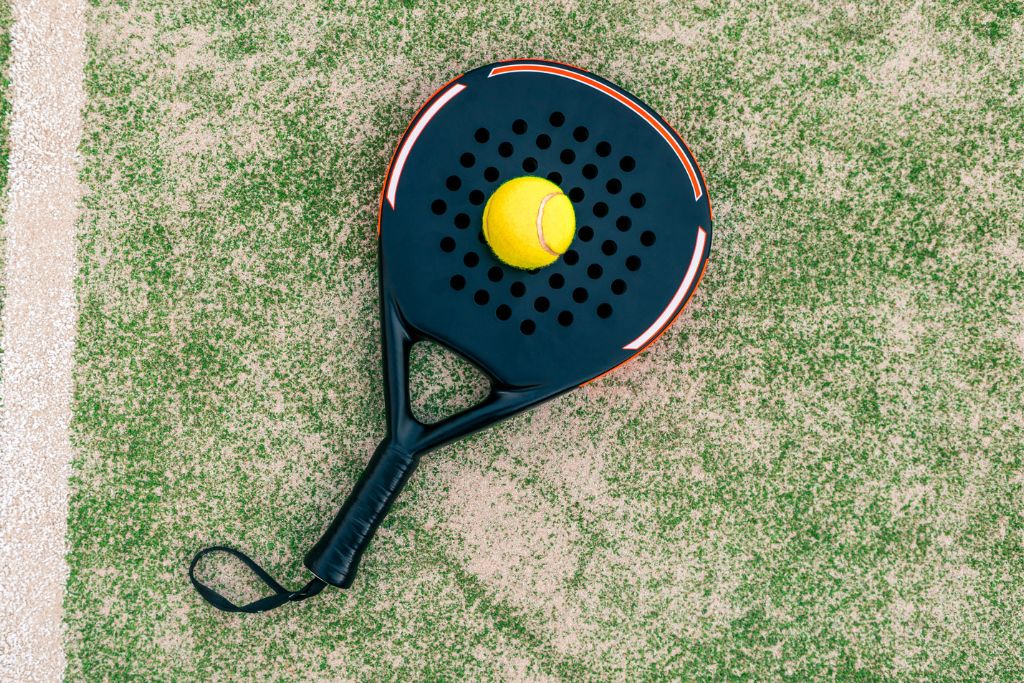
Padel is a fast-paced racket sport combining elements of tennis and squash in a compact, enclosed court. This unique game is fun and surprisingly easy to pick up for players of all ages and ability levels. Whether you’re completely new to racket sports or a seasoned player looking for something fresh, this guide covers everything you need to know.
At Bluecoat Sports in Horsham, we have four outdoor Padel courts available to hire. Whether you want to try it for the first time or you’re looking to play regularly, you can book a court online or read on to get up to speed first.
What is padel
Padel is a racket sport that originated in Mexico in the 1960s and has since become one of the most popular sports worldwide. It’s played in doubles on an enclosed court, using solid paddles and a low-pressure ball.
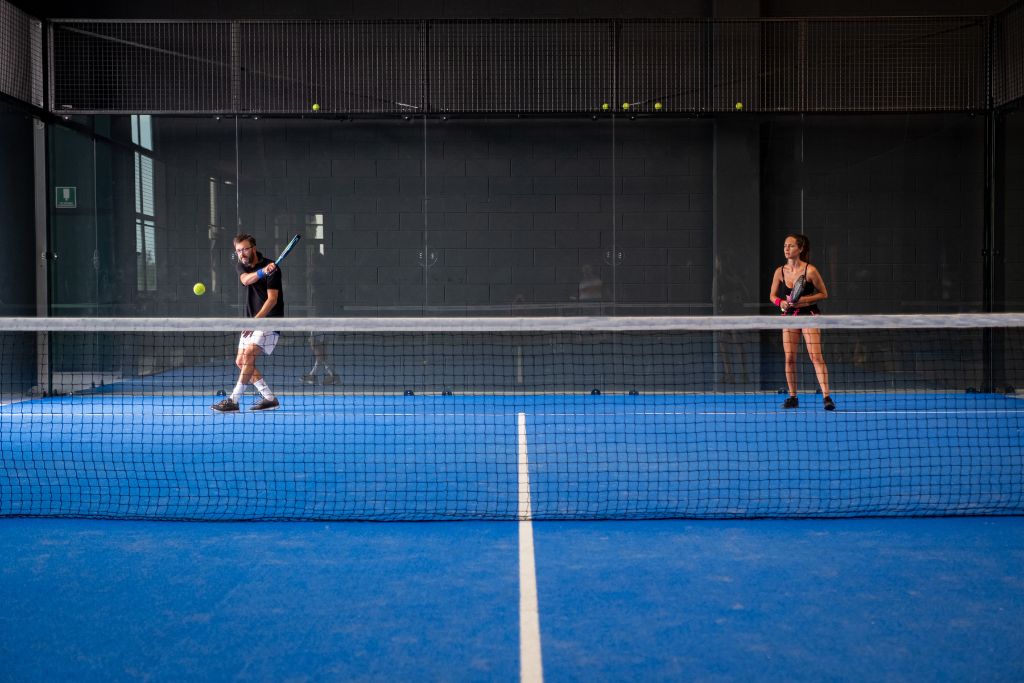
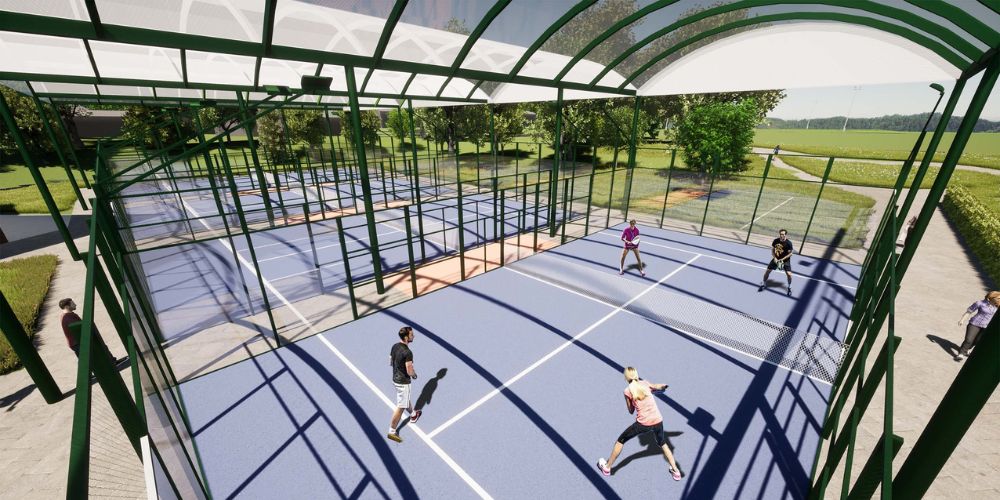
The defining feature of Padel is the court’s glass and mesh walls. The ball can be played off the walls after bouncing, adding a strategic dimension that makes even beginner rallies exciting. The underhand serve and the use of walls give Padel a character of its own.
Padel is often described as the most social of racket sports. Because it’s always played in doubles and rewards teamwork as much as raw ability, it’s ideal for mixed-ability groups, families, and anyone looking for a sport that’s enjoyable from day one.
How is Padel different from tennis and squash?
Padel shares similarities with other racket sports like tennis and squash, but it’s distinct from each:
- Padel is generally easier to pick up than tennis. The underhand serve and smaller court mean beginners can enjoy proper rallies from their very first session.
- The court is smaller than a tennis court (20m x 10m) and fully enclosed, making rallies faster and more compact.
- Unlike squash, padel is played outdoors (most courts have a roof) and is always doubles.
- The solid paddle replaces the strung racket, and the ball is slightly lower in pressure than a tennis ball, which changes how it bounces and responds off the walls.
How to get started playing Padel
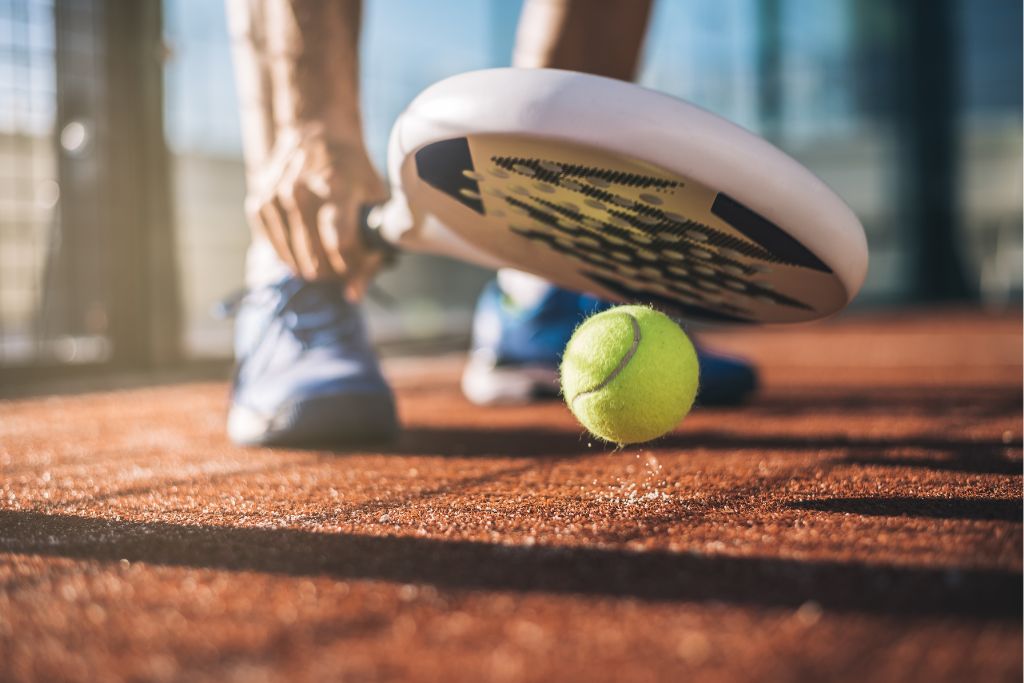
Getting started with Padel is simple. Most venues, including Bluecoat Sports, offer court hire with equipment available to borrow or hire on site.
What you’ll need:
- A group of four – padel is always doubles
- A padel racket (available to hire at Bluecoat Sports)
- Padel balls (provided with court hire)
- Comfortable sports clothing and court shoes with good lateral support
If you’ve never played before, don’t worry. The best way to learn is simply to get on court. The underhand serve is easy to master, and the enclosed walls mean the ball stays in play much longer, so beginners tend to get into proper rallies much sooner than they expect.
The Padel court
A standard Padel court measures 20 metres long by 10 metres wide. The net sits in the centre and stands 0.88 metres high at the posts, dropping slightly lower in the middle. The playing surface is usually artificial grass or a blend of acrylic and rubber – a comfortable, low-impact surface that’s easy on the joints.
The court is fully enclosed by a combination of glass walls and metallic mesh fencing, which is what makes padel unique: the walls are in play, and the ball remains live after bouncing off them. How they factor into gameplay is covered in the rules section below.
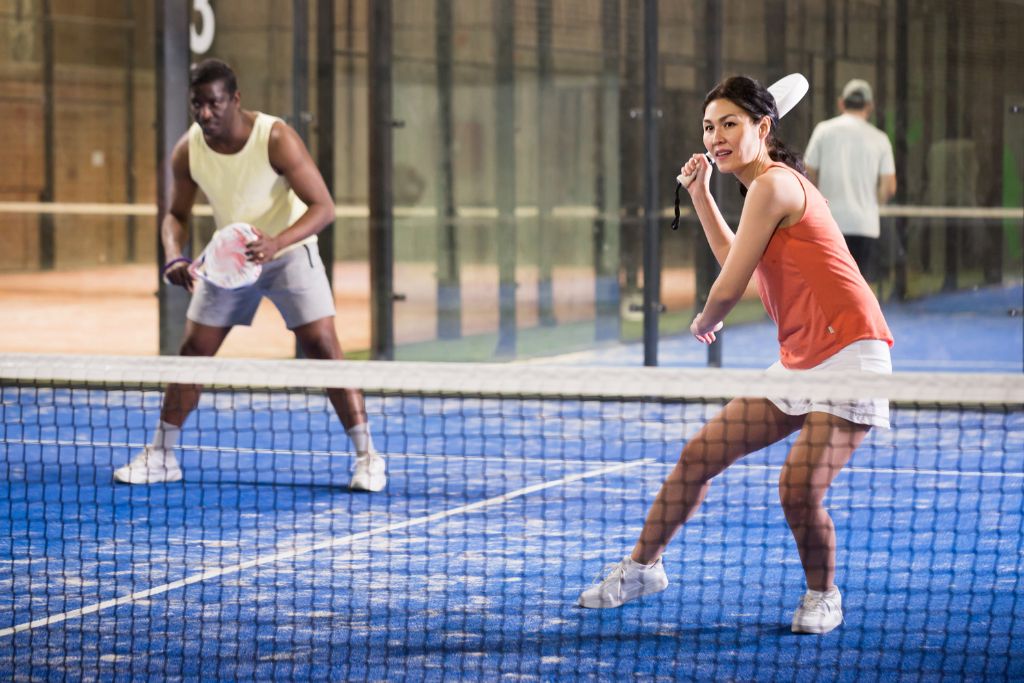
Padel equipment
Padel rackets
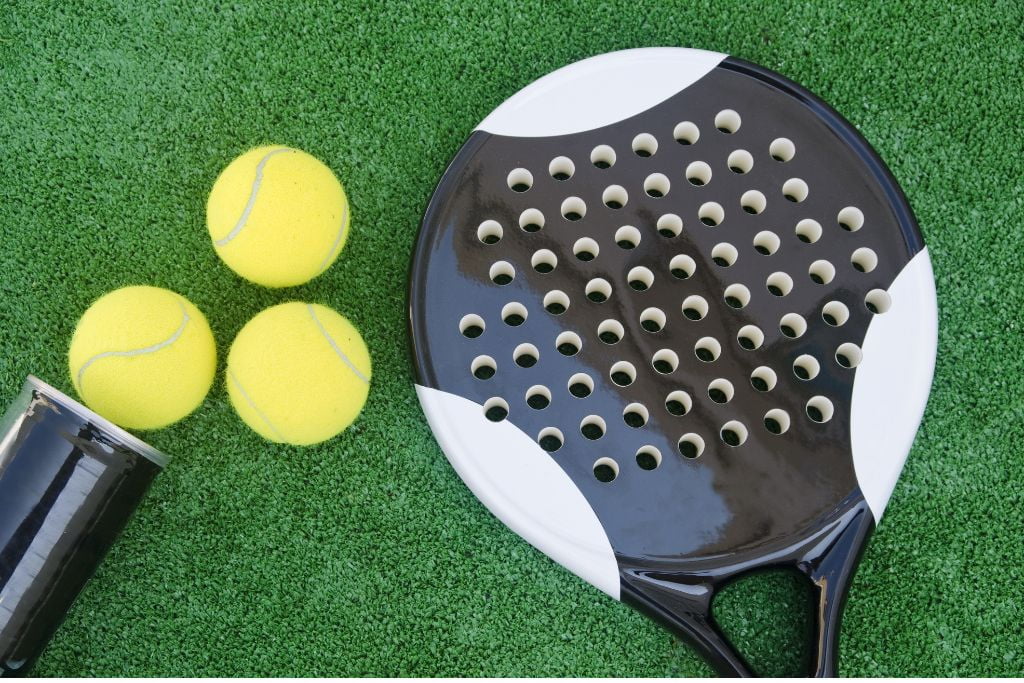
Padel rackets (also called Padel bats or paddles) are smaller and more compact than tennis rackets. They’re made from materials such as carbon fibre or fibreglass, with a distinctive rounded or tear-drop shape and a solid, perforated face rather than strings. This design gives players excellent control and manoeuvrability within the confined court.
When choosing a racket:
- Beginners should look for a well-balanced racket with a large sweet spot – these are more forgiving and make clean contact easier.
- Intermediate and advanced players often prefer lighter, more manoeuvrable rackets for faster swing speeds and greater precision.
If you’re trying Padel for the first time, there’s no need to buy a racket. Hire one and see how you get on first.
Padel balls
Padel balls look similar to tennis balls but are not interchangeable. The key differences:
- Pressure – Padel balls have slightly lower internal pressure than tennis balls, which affects how they react off the racket and the walls.
- Bounce – Because of the lower pressure, padel balls bounce lower, making strategy and positioning more important.
- Durability – The materials differ slightly, meaning Padel balls wear at a different rate to tennis balls. Always use the correct ball for the best experience.
Footwear and apparel
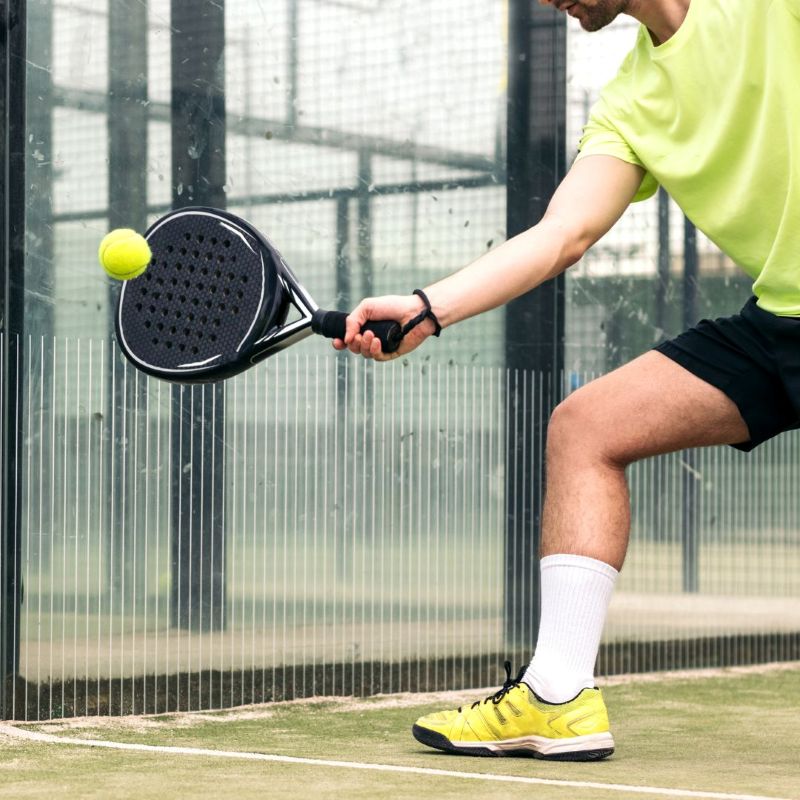
Choose lightweight, breathable sports clothing that allows a full range of movement. The most important decision is your footwear. Look for shoes designed for Padel or court sports, with good grip and lateral support for the quick side-to-side movements the game demands. Proper court shoes protect the playing surface and reduce your risk of ankle and knee injuries
Padel rules
Scoring
Padel follows the same scoring system as tennis. Points progress from love (0) to 15, 30, 40, and then game point. If both teams reach 40–40 (deuce), one team must win two consecutive points to take the game: one point brings advantage, and the next wins the game. A set is won by the first team to reach six games with at least a two-game lead. Matches are typically best of three sets.
Serving
There are three essential rules to know about serving in padel:
- Underhand only – The serve must be played underhand, with the ball struck at or below waist level. Overhand serving is not permitted.
- Diagonal delivery – You must serve diagonally into the opposite service box. The ball must bounce in the correct box before the receiver can return it.
- Two attempts – You get two chances to land a successful serve. If the ball clips the net and lands correctly in the service box, it is a let and the serve is retaken.
Winning a point
You win a point when:
- The ball bounces twice on your opponent’s side of the court
- The ball strikes your opponent, or anything they are wearing or carrying
- The opposing team hits the ball into the net on a serve, fails to return the ball, or hits it out of bounds without it touching your side of the court first
How the walls work
The walls are what make padel unique, and understanding them is key to enjoying the game.
After the ball bounces once on the floor, players can use any wall to keep the ball in play. Skilled players use the walls to create unexpected angles, play low skidding shots off the back glass, or loft high balls that kick off the side walls at difficult angles. The walls reward court awareness and creative shot-making.
A few important rules about the walls:
- The ball must bounce on the floor before hitting a wall for the rally to continue. You cannot play the ball directly off a wall without it first bouncing on the floor.
- If the ball bounces on the floor and then exits the court through an open section (such as a gate), the point continues and the receiving player may step outside the court to play the shot.
- If the ball bounces and then hits the fencing or walls without being returned by the opponent, the point is lost.
Court lines during play
During a rally, only the outer boundary lines are in use. The ball does not need to land within any service box line – the walls act as the natural boundary. The outer lines simply indicate when the ball has gone out of bounds before touching a wall. The service line and its bisecting line are only relevant during the serve itself.
Techniques and strokes
Once you have the basics, Padel rewards players who develop a varied game. Here are the key strokes:
| Stroke | Description | Purpose |
| Forehand | Hit with the front of the dominant hand | Power and control |
| Backhand | Hit with the back of the dominant hand | Angles and control |
| Lob | Send the ball high and deep into the opponent’s court | Defensive play |
| Volley | Hit the ball before it bounces | Aggressive net play |
| Smash | Powerful overhead shot | Finishing a point |
| Bandeja | Controlled overhead shot with finesse | High, deep placement |
| Vibora | Wrist flick sending the ball diagonally | Deceptive shot |
Building your foundation
Start with your forehand and backhand, practising hitting the ball comfortably on both sides for consistent control. From there, work on your volley at the net – net play is central to Padel, and a confident volley is one of the most useful skills to develop early. Add the smash once you are ready: a well-placed overhead is one of the most effective ways to finish a point.
Once you have the basics, work towards adding in a lob or bandeja for more advanced gameplay.
For tips on how to improve your Padel game, read our blog.
Padel tips for beginners
Padel relies on teamwork and tactical awareness as much as technical skill. Here are the three core strategic principles to focus on as a beginner:
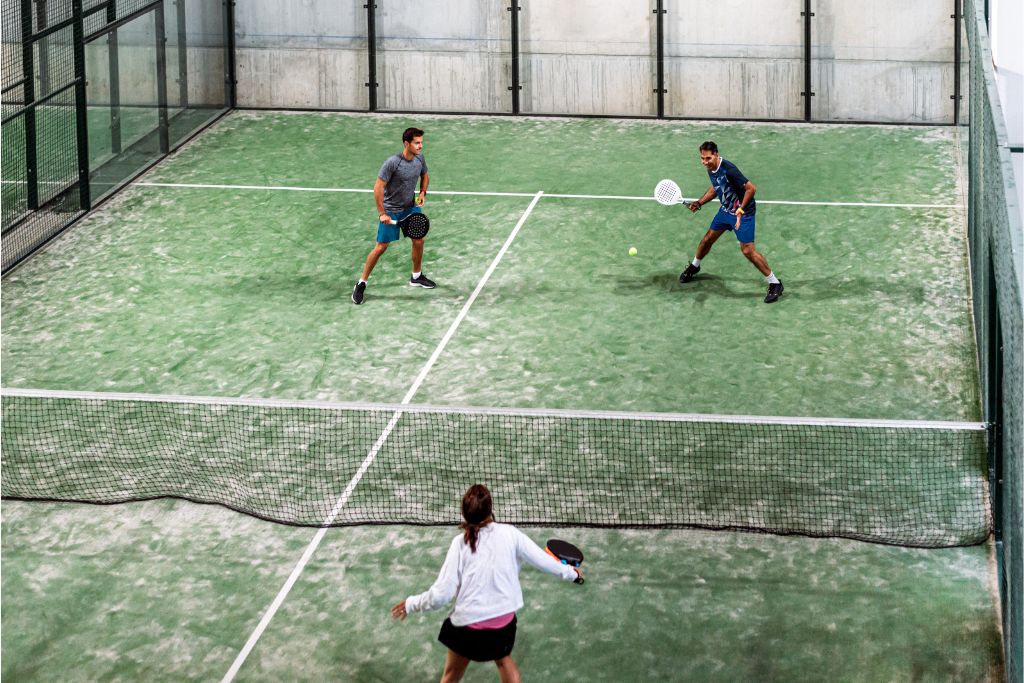
- Positioning – Always aim to be in the right place before the ball arrives. Anticipate where the ball is going and position yourself for a controlled return. As a pair, try to move across the court in unison, maintaining a consistent width between you and your partner.
- Communication – Talk to your partner throughout the game. Call shots, discuss who is taking the ball in the middle, and alert each other to your opponents’ positioning. Clear communication prevents confusion and keeps you moving as a coordinated unit.
- Match tactics – Be prepared to adapt. Switch between aggressive net play and more patient baseline play depending on the score and your opponents’ weaknesses. Exploit the gaps, cover your own vulnerabilities, and adjust your approach as the match develops.
Play Padel at Bluecoat Sports
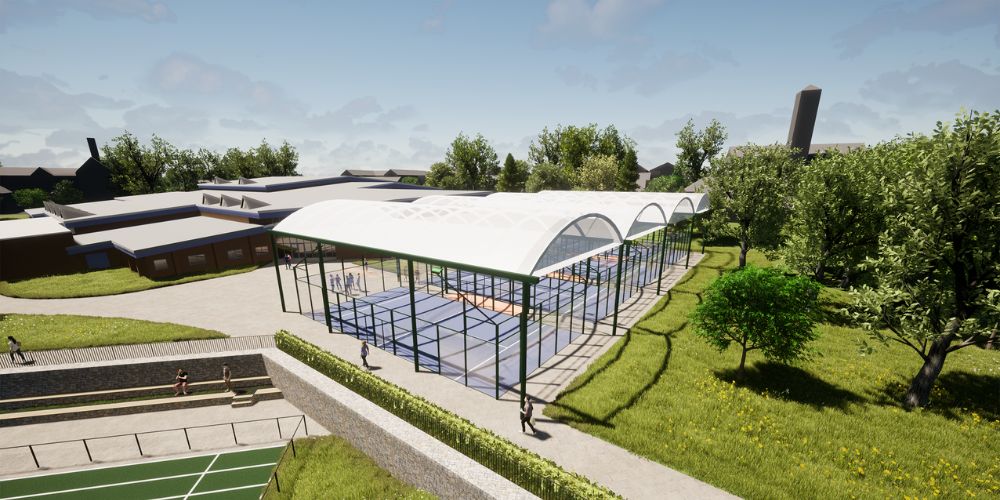
Bluecoat Sports in Horsham has four covered and floodlit outdoor Padel courts available to hire for members and non-members, complementing our full range of racket sports facilities – including six squash courts, badminton, short tennis, and table tennis facilities.
Whether you’re a complete beginner or a regular player, you’ll find everything you need on site for this dynamic sport. Want to join one of our instructor-led sessions? Explore your options here.

Frequently Asked Questions
Can I play padel if I’ve never played tennis before?
Yes, absolutely. Padel is designed to be accessible for players of all backgrounds. The underhand serve, enclosed court, and lower-pressure ball make it easy to pick up from scratch, and you’ll be rallying comfortably within your first session.
Can padel be played in all weather conditions?
Most padel courts in the UK are fully enclosed or have overhead roofing, which means play can continue in light rain or wind. This makes padel one of the most weather-proof racket sports available and a great year-round option.
What are the health benefits of playing padel?
Padel improves cardiovascular fitness, builds muscle strength, and sharpens hand-eye coordination. The quick lateral movements develop agility and balance, while the social nature of the game makes it easy to stay motivated. It is accessible for a wide range of ages and fitness levels.
How long does a padel match last?
A typical padel match, played as best of three sets, lasts between 60 and 90 minutes depending on the level of play and how competitive the sets are.