
Training for your first 5K is an exciting challenge. Whether you’ve entered a race, want to improve your fitness or simply feel ready to start running, having a clear goal can give you something to work towards.
For many beginners, five kilometres can sound daunting, with questions about how quickly you should run, whether you need to complete the whole distance without stopping, and how to tell if you’re making progress.
This guide explains how a running track can make the process feel much more manageable. With a measured distance, predictable surface and clear lap markers, you can focus on building endurance and confidence without worrying about planning a route.
At Bluecoat Sports, our new outdoor athletics track in Horsham, West Sussex, provides a dedicated place to work towards your first 5K at your own pace. Explore our membership options, book a pay-as-you-go track session or call reception on 01403 247572 for assistance.
Why use a running track for your first 5K?
You can prepare for a 5K in many ways, but a running track offers several useful benefits for beginners:
- Clearly measured distances: A standard outdoor track measures 400 metres around the measured inside lane, so a 5K is 12.5 laps. This removes some of the guesswork from training.
- A predictable running surface: There are no road crossings, unexpected hills or sudden changes in terrain to interrupt your rhythm.
- Easier pacing: The consistent distance and layout make it easier to focus on your breathing, pace and how your body feels.
- Suitable for all abilities: Tracks are not only for fast or experienced runners. They can be used for brisk walking, gentle jogging, easy running, the walk-run method and controlled intervals.
- Simple to adapt: You can move at a pace that suits your current fitness level and switch between walking and running as needed.
- Progress is easier to recognise: You may notice that you can run for longer before walking, complete another lap comfortably or recover more quickly after each effort.
Keep in mind that you don’t need to complete all 12.5 laps when you start your individual training program. Instead, focus on one lap, the next kilometre or maintaining a comfortable effort for a little longer.
How to train for your first 5K on a running track
Once you understand how the 5K distance breaks down on a track, you can start training in a way that suits your current fitness and experience.
You don’t need specialist equipment or a rigid 5K training plan. The key is to arrive prepared, start slow at a manageable level and build gradually as your body adjusts.
Get ready for your first track session
A little preparation can make your first sessions more comfortable:

- Wear suitable running shoes: Choose supportive trainers that fit well and are suitable for exercise.
- Dress for the conditions: Wear comfortable clothing that allows you to move freely, with layers when needed.
- Bring water: This is particularly useful in warmer weather or during longer sessions.
- Train with a friend: Running or walking with someone else can make sessions more enjoyable and help you stay motivated.
- Ask for advice: Speak to the Bluecoat Sports team or a qualified fitness professional if you’re unsure where to begin.
- Set a simple goal: This might be completing several comfortable laps, spending a certain amount of time moving or trying a mixture of walking and jogging.
Building up to your first 5K is a gradual process and may take several weeks or months, depending on your starting point. Focus on manageable sessions and steady progress rather than rushing to cover the full distance. With our dedicated Bluecoat Sports app on iOS and Android, you can record your workouts and track your progress along the way.
Start at a comfortable pace
Begin at a pace that feels controlled rather than trying to run too quickly from the outset. During an easy run, you should usually be able to speak in short sentences without struggling for breath. If you feel exhausted after the first lap, ease back or return to walking.
Try not to compare yourself with other runners on the track, as they may have more experience or be training for a different goal. Giving your body time to adjust will help you build endurance more steadily and reduce the risk of doing too much too soon.
Read our guide on boosting endurance with track workouts.
Use the walk-run method
The walk-run method combines brisk walking with gentle jogging or running, helping you spend longer moving without becoming too tired.
A running track makes this easy to manage, as you can use the straights, bends, markings or complete laps as cues for changing pace. This can help you control your breathing, build endurance gradually and gain confidence before attempting longer running sections.
There is no fixed balance between walking and running, so adjust each session according to how you feel.
Build towards the full distance gradually
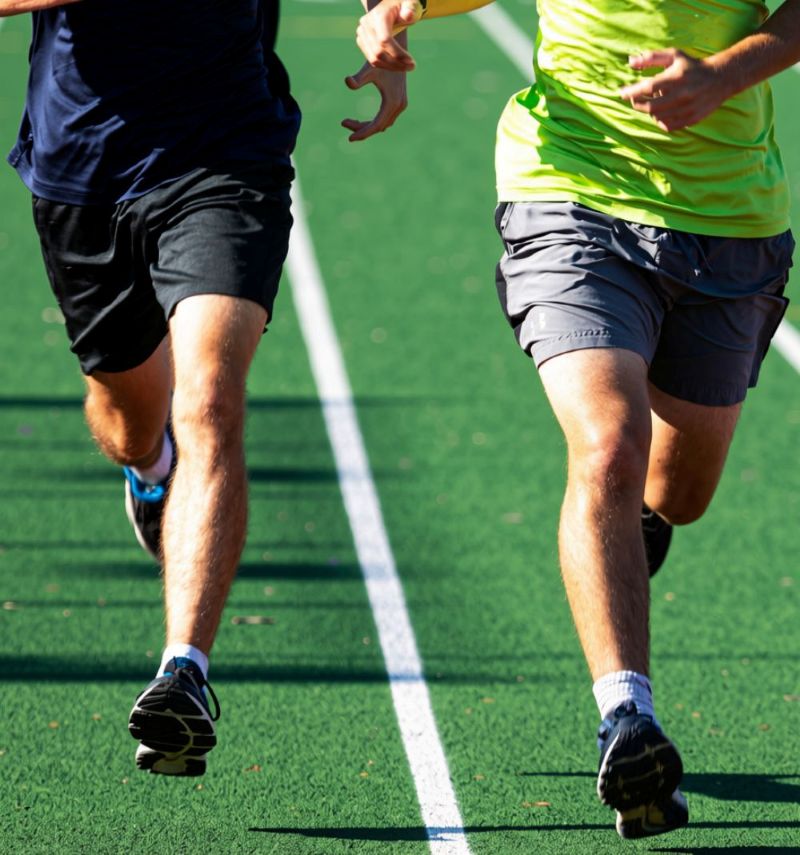
Focus on small improvements, such as running slightly farther before walking, completing another lap or finishing with more energy. Avoid increasing your distance, speed and training frequency all at once, as doing too much too soon can lead to fatigue and increase the risk of injury.
Some sessions will naturally feel harder than others. Sleep, stress, weather and other factors can all affect performance, so slowing down, repeating a familiar distance or taking an extra rest day should be seen as sensible parts of training.
Use the track to practise pacing
Starting too quickly is a common mistake among new runners. You may feel fresh during the opening laps, but an overly fast start can make the rest of the session much harder.
As each lap covers a consistent distance, a running track is ideal for learning what a sustainable pace feels like. Focus on maintaining a steady effort rather than chasing a specific lap time, using your breathing and overall effort as guides.
Allow time for rest and recovery
Before running, warm up with brisk walking or gentle jogging to gradually raise your heart rate and body temperature. Dynamic stretches such as leg swings or walking lunges can also help prepare you for the session ahead and reduce the chance on injuries.
Afterwards, be sure to cool down. Slow to an easy jog or walk rather than stopping suddenly. This gives your breathing and heart rate time to settle, providing a more comfortable end to your workout.
Rest days give your body time to recover and adapt to running, so you do not need to train every day. Gentle walking, swimming or cycling can provide active recovery between track sessions.
When you feel ready to complete your first 5K
When you feel ready to attempt the full distance or take part in a race, avoid making sudden changes to your training in the final week. Keep the last few sessions comfortable, allow time to recover and wear familiar running shoes and clothing.
Start at a controlled pace, focus on your own effort and use walking breaks if needed. Whether you run the whole way or use the walk-run method, completing your first 5K reflects the progress you’ve made.
Running track tips before you start
Before your first session, ask a member of the Bluecoat Sports team about any track rules or lane arrangements you need to follow.

A few basic points will also help you train safely and confidently:
- Use the appropriate lane: Lane arrangements vary between tracks and sessions, so follow the signs or ask the team which lanes are best for running, jogging and walking.
- Look before changing lanes: Be aware of runners approaching from behind and avoid moving suddenly across the track.
- Remember that outer lanes are longer: A lap is only exactly 400 metres in the measured inside lane. If you train in an outer lane, you will cover slightly more distance.
- Choose a quieter time: If you’re new to track running, a less busy session can help you learn the layout and settle into your pace.
Following the track guidance will help everyone enjoy their session and make the most of their training.
Summary
Training for your first 5K is about progressing at a pace that feels right for you. A running track makes it easier to measure distance, practise pacing and build confidence using clear, manageable milestones.
Start with comfortable laps, use the walk-run method if helpful and increase your distance gradually. There is no fixed timeline for completing a 5K, so focus on consistency, recovery and what your body feels ready for.
Train for your first 5K at Bluecoat Sports
The outdoor athletics track at Bluecoat Sports provides a measured and motivating place to prepare for your first 5K. You can also complement your running with swimming, strength training or gym sessions.
Whether you have entered a race or simply want a new challenge, the track gives you a dedicated place to work towards your goal at your own pace.
If you have any questions about our facilities or becoming a member, please call reception on 01403 247572, and we’ll be happy to help.
Frequently asked questions
How many laps of a running track is a 5K?
A 5K is 12.5 laps of a standard 400m running track. Beginners can work towards this gradually using individual laps and kilometre markers as smaller goals.
Can a beginner train for a 5K on a running track?
Yes. A running track is useful for beginners because the distance is measured, the surface is predictable, and it can be used for brisk walking, gentle jogging and walk-run sessions.
Do I need to run the whole 5K without stopping?
No. Many beginners combine running and walking during training and on race day. Completing the distance safely and confidently is more important than running every step.